Purdue Faculty Receives NSF Grant to Study How AI Labor Forecasts Influence Stakeholders and Policy
How do predictions about artificial intelligence (AI) and the future of work shape the decisions of policymakers, business leaders, and workers? A new study led by Purdue University’s Dr. Daniel Schiff, Assistant Professor of Political Science, and Dr. Luisa Nazareno, Assistant Professor at Virginia Commonwealth University’s Wilder School of Government and Public Affairs, seeks to answer that question.
Their collaborative research lab, titled FAIRWORK (Forecasting AI Risks and Impacts on the Workforce), has been awarded $210,000 in grant funding from the National Science Foundation’s Science of Science: Discovery, Communication, and Impact (SOS:DCI) program. The new research builds on prior studies by both principal investigators into impacts of AI on worker well-being and on seed funding from Purdue’s College of Liberal Arts and the Office of the Executive Vice President for Research and Partnerships.
As part of the recently-funded project, the team will investigate how academic forecasts about AI’s impacts on job displacement, wages, and workplace dynamics influence real-world decision-making. The researchers will focus on three critical groups, including U.S. policymakers, business managers, and workers, to understand how exposure to competing narratives about AI influences their beliefs, policy preferences, and behaviors.
“Predictions about AI and the workforce often tell very different stories. Some suggest massive disruption, others emphasize opportunity,” said Dr. Schiff, who co-directs Purdue’s Governance and Responsible AI Lab (GRAIL). “These narratives also shift with technological advancements, which creates uncertainty for those trying to plan responsibly. We want to better understand how these competing signals influence people’s thinking and action.”
Dr. Nazareno, also a GRAIL faculty affiliate, adds, “Our aim isn’t only to assess the effects of these forecasts on behavior, but to equip stakeholders with clearer, more actionable insights. With so much conflicting information in circulation, people need help making sense of what these studies actually say and what they mean for their lives and organizations.”
To explore these questions, the researchers will conduct a large-scale, multi-sample survey experiment, exposing participants to different types of scholarly forecasts that vary in tone, level of disruption, and target population. The team will then measure changes in beliefs, support for AI-related policy interventions like retraining programs, and preferences around workplace adoption strategies.
Beyond academic publications, the project will produce a public-facing online portal that offers interactive tools to compare labor forecasts by occupation, industry, demographic group, and methodology. It will also include other elements under development by the FAIRWORK team: plain-language summaries of key AI labor studies, a comprehensive literature review, and open data and replication materials to support transparency and future research.
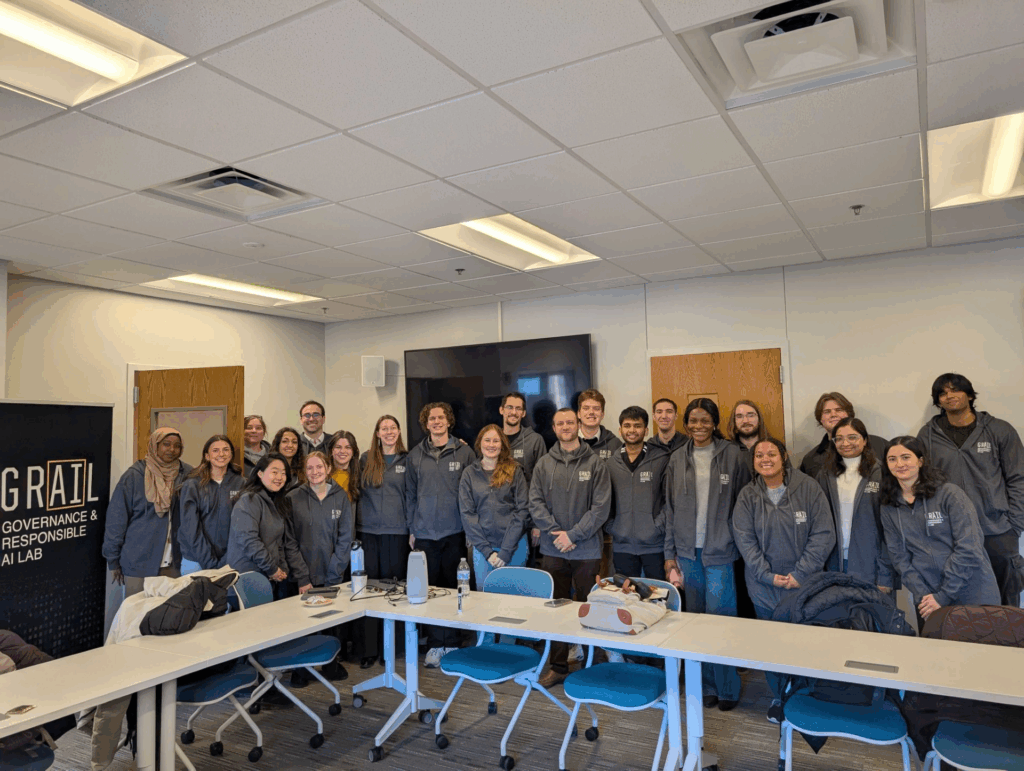
The broader FAIRWORK lab currently engages more than a dozen graduate and undergraduate students at Purdue, VCU, and the National University of Singapore, and forms part of a growing portfolio of GRAIL-led initiatives focused on responsible AI governance, public engagement, and the real-world impacts of emerging technologies